Neutral-Grip Pull-Ups
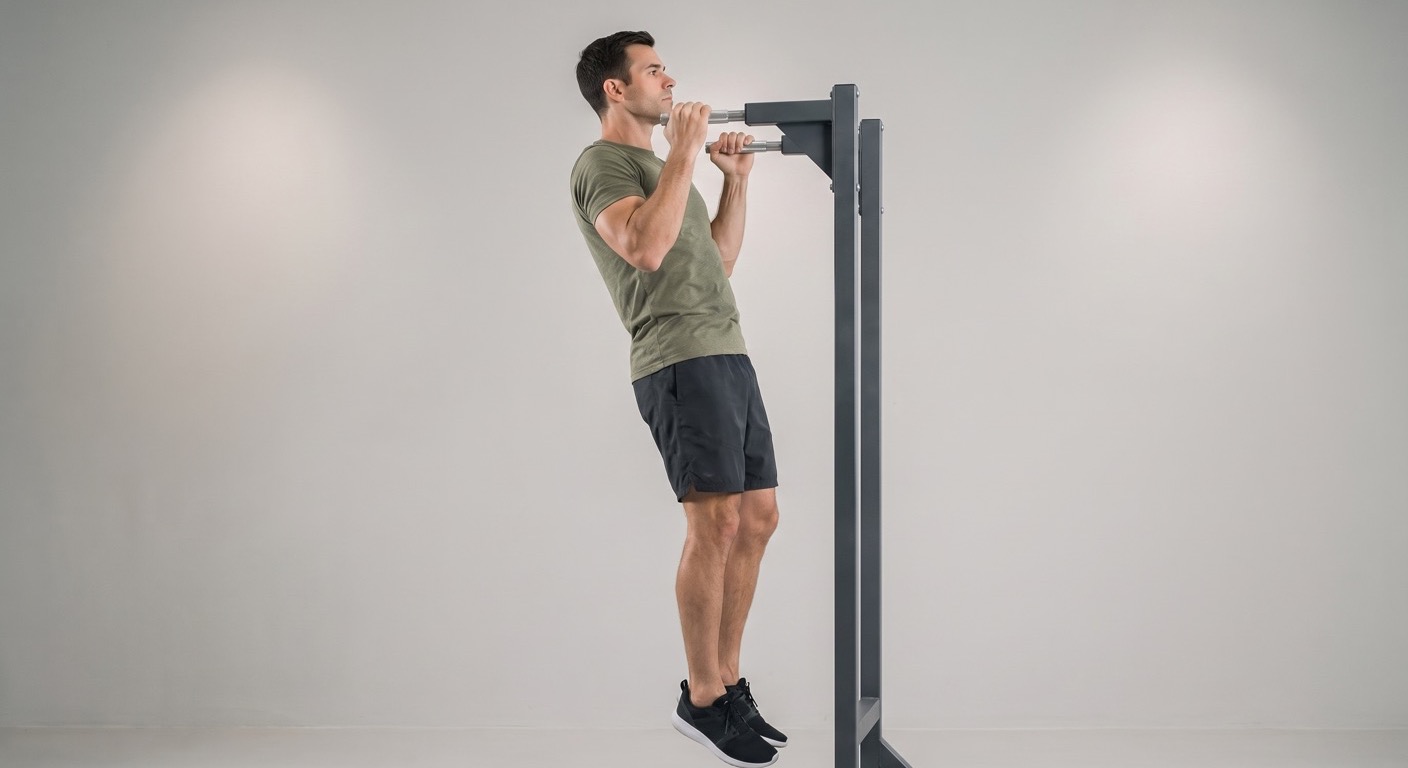
Neutral-grip pull-ups are performed on parallel handles with the palms facing each other. This middle position between overhand pull-ups and underhand chin-ups is comfortable for many wrists and shoulders, provided the handles match your frame and you use a controlled range of motion.
How to do neutral-grip pull-ups
- Choose parallel handles around shoulder width and grip them with the thumbs wrapped.
- Start from straight arms with your torso braced and shoulders under control.
- Set the shoulder blades down, then pull your elbows toward your back pockets.
- Rise until your chin passes hand height without pushing your head between the handles.
- Lower smoothly to a full, repeatable bottom position.
Muscles worked
The lats and upper back remain the primary pulling muscles. The neutral forearm position lets the brachialis, biceps and brachioradialis contribute strongly, while the hands and forearms secure the handles. Your core controls the legs and pelvis. The exercise is not inherently superior to other grips; its advantage is that it can provide a strong, natural-feeling line of pull.
Common mistakes
- Using handles that are too wide. Choose the closest comfortable pair rather than forcing a wide neutral grip.
- Shortening the bottom. Straighten the elbows while maintaining active control around the shoulders.
- Driving the head forward. Move the body vertically and keep the neck neutral.
- Adding weight too early. First make every bodyweight rep consistent.
Progressions
Use band or machine assistance if you cannot yet complete a full rep. Once you can perform several clean sets, add a pause near the top, a slower lowering phase or small amounts of external load. Neutral handles are also useful for L-sit pull-ups if the equipment leaves enough leg room.
See the complete pull-up variation guide, compare chin-ups, review proper form, or follow the 50 pull-ups programme.