L-Sit Pull-Ups
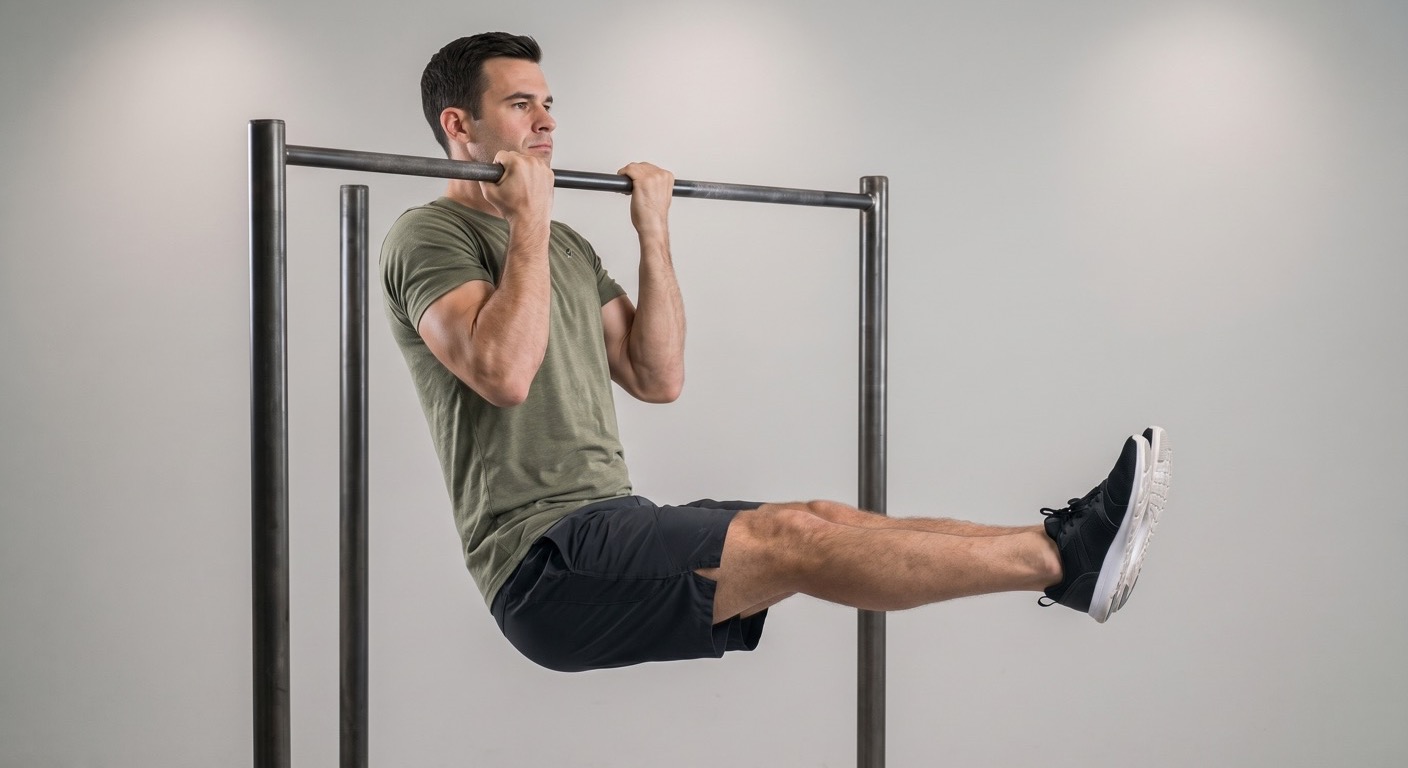
An L-sit pull-up combines a strict pull-up with straight legs held horizontally in front of the body. The position removes most opportunity to kip and adds sustained abdominal, hip-flexor and quadriceps work. It requires both pulling strength and enough compression to maintain the shape.
How to do L-sit pull-ups
- Take a secure overhand or neutral grip and establish a quiet hang.
- Brace your abdomen, straighten the knees and raise both legs until they are approximately parallel to the floor.
- Keep the L shape while drawing the shoulder blades down and pulling the elbows toward your sides.
- Lift the chin above the bar without letting the legs collapse.
- Lower under control, then lower the legs safely when the set is complete.
Muscles worked
The lats, upper back and elbow flexors produce the pull. The abdominals hold the pelvis and resist arching, while the hip flexors lift the thighs and the quadriceps keep the knees straight. Grip and shoulder stabilisers support the entire suspended position.
Progressions
Begin with strict pull-ups using a slight hollow-body position. Then practise hanging knee raises and tucked pull-ups with the knees near the chest. Extend one leg at a time before attempting both straight legs. You can also hold the L position briefly between individual reps instead of forcing a long set.
Common mistakes
- Bending the knees unnoticed. Use a shorter set or return to the one-leg progression.
- Throwing the legs up to start the pull. Establish the L before the elbows bend.
- Leaning far back. Some torso angle is natural, but do not turn the movement into a horizontal row.
- Holding the breath for the whole set. Brace firmly while taking controlled breaths between repetitions.
Keep sets short enough to preserve both the pull and the leg position. Compare weighted pull-ups and the other advanced variations, or build strict capacity with the 50 pull-ups programme.