Chin-Ups: Underhand Pull-Up Guide
A chin-up is a vertical pull performed with your palms facing you. The underhand grip gives the elbow flexors a strong mechanical role, so many beginners find chin-ups easier than overhand pull-ups. It is still a full upper-body exercise, not simply a biceps curl on a bar.
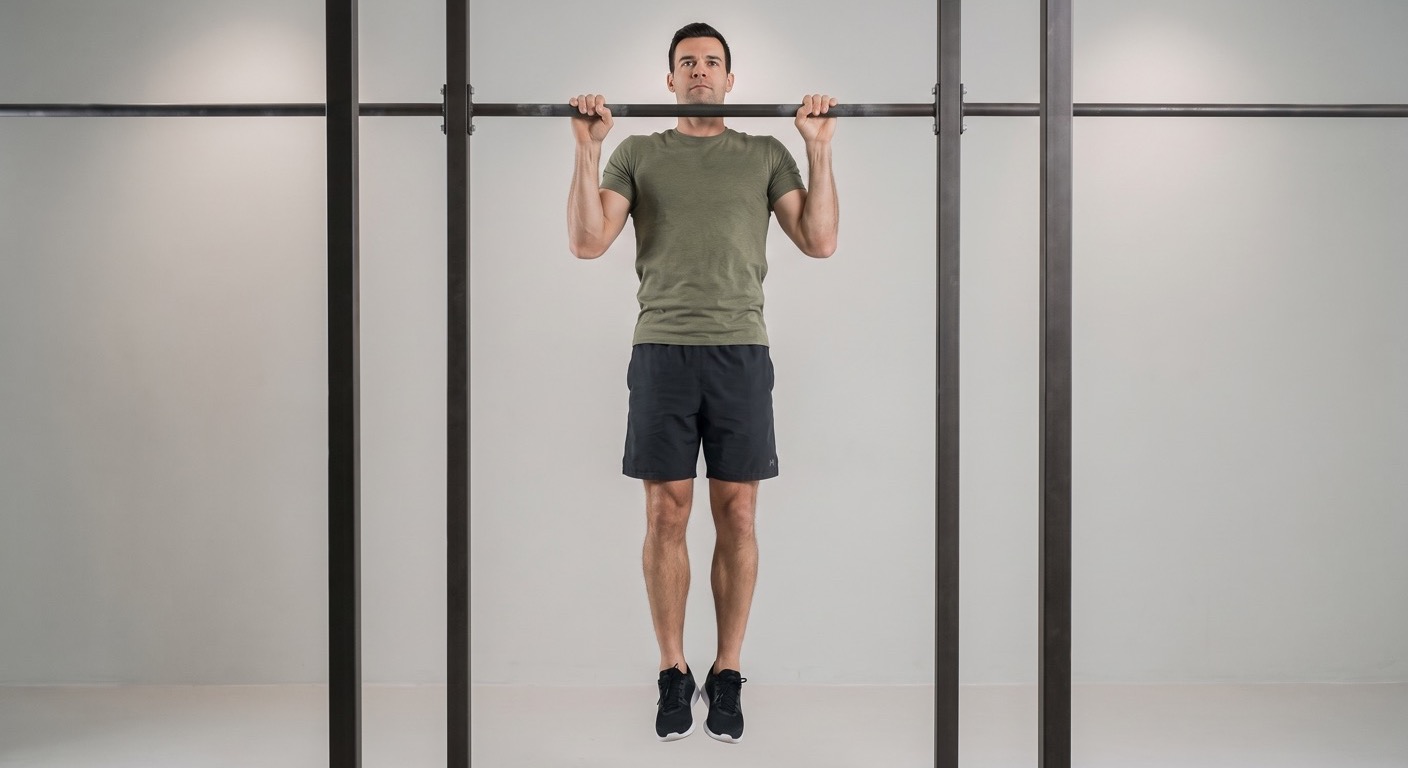
How to do a chin-up
- Take an underhand grip around shoulder width. Wrap your thumbs securely around the bar.
- Begin from a controlled hang with straight elbows. Brace your abdomen and keep your legs quiet.
- Draw your shoulder blades down, then drive your elbows toward your ribs.
- Pull until your chin clears the bar without reaching forward with your neck.
- Lower under control to straight arms before starting the next repetition.
Muscles worked
Your latissimus dorsi and other upper-back muscles move the upper arm and control the shoulder blades. The biceps, brachialis and forearms bend the elbows and maintain the grip. Your abdominal and glute muscles help prevent swinging. Compared with an overhand pull-up, the underhand position generally lets the elbow flexors contribute more comfortably; it does not remove the back from the exercise.
Common mistakes
- Using a very narrow grip. Hands almost touching can force an uncomfortable wrist angle. Start near shoulder width.
- Craning the chin. Finish by lifting the body, not by stretching the face over the bar.
- Dropping from the top. The controlled descent is valuable training and protects consistency between reps.
- Turning every rep into a swing. Keep strict chin-ups separate from deliberate kipping practice.
Progressions and programming
If a full chin-up is not available yet, use assisted reps or step to the top and practise slow negatives. When bodyweight sets become comfortable, add pauses at the top or progress gradually toward weighted pull-ups.
Use chin-ups as an alternative main movement or as a second exercise after strict overhand pull-ups. Two to four controlled sets are enough for most sessions; stop before grip or range of motion collapses.
Compare the other pull-up variations, review proper pull-up form, or build your base with the 50 pull-ups programme.