Kipping Pull-Ups
A kipping pull-up uses a deliberate hollow-to-arch swing to help cycle repetitions efficiently. It is common in functional-fitness workouts where the task is repeated bar work, but it is not a substitute for strict pulling strength and does not belong in a strict pull-up test or the counted sets of this programme.
How the kip works
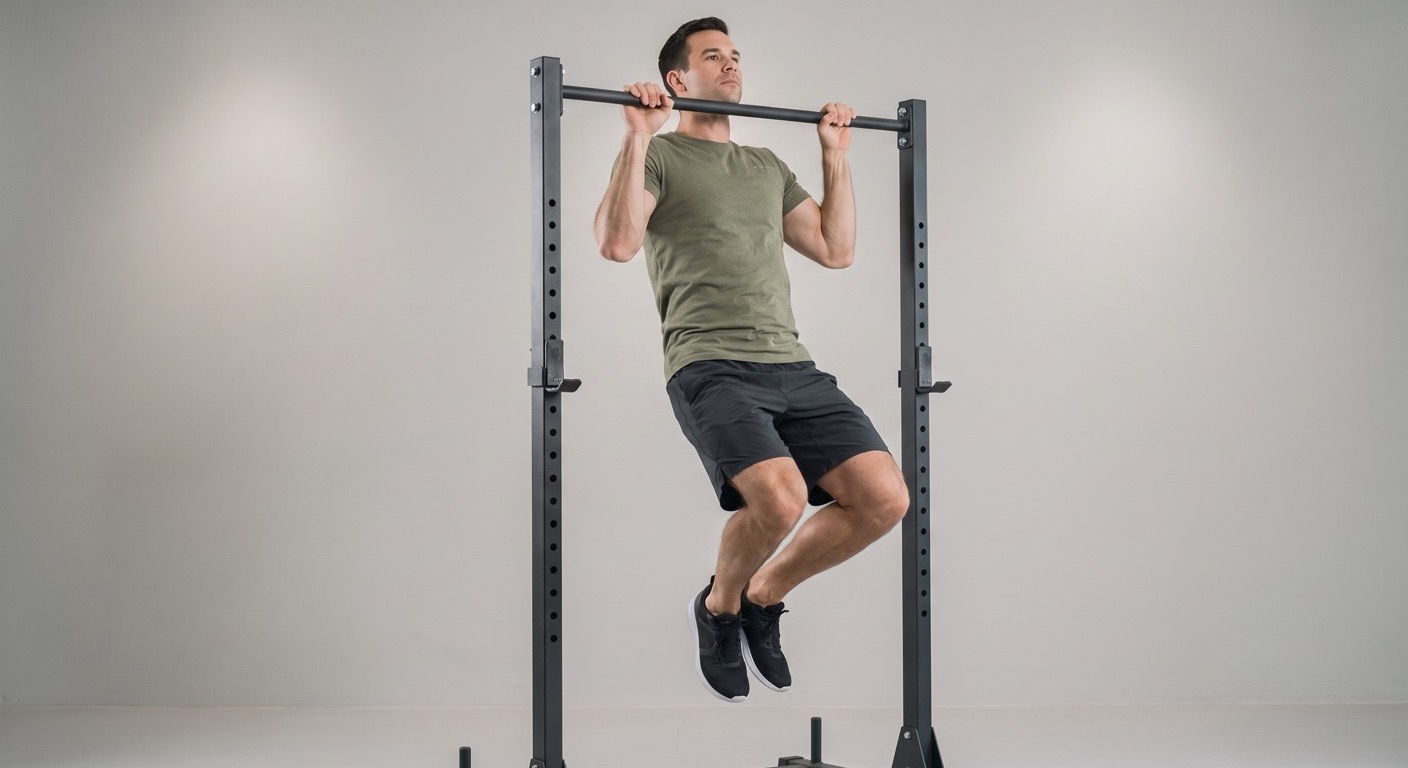
- Begin with a secure overhand grip, sufficient space and an active hang.
- Move into a small arch position: chest slightly forward, feet behind, trunk tight.
- Reverse into a hollow position by pressing down on the bar and bringing the feet slightly forward.
- As the body travels upward, finish with an arm pull until the chin clears the bar.
- Push away from the top to return smoothly into the next arch instead of dropping vertically.
Purpose and prerequisites
Kipping coordinates the shoulders, trunk and hips to maintain a rhythm. It can reduce the arm effort per repetition while increasing speed and total cycling demand. Before learning it, build pain-free strict pull-ups, controlled active hangs and a stable hollow-to-arch swing. Fatigue and poor timing can place large repeated loads on the shoulders and grip.
Common mistakes
- Using a wild leg kick. The kip is a connected whole-body shape change, not pedalling the feet.
- Dropping from the top. Push away to connect the next swing and avoid a sudden uncontrolled catch.
- Learning under workout fatigue. Practise small sets while fresh before considering volume.
- Counting kipping reps as strict progress. Track the two skills separately.
- Ignoring equipment clearance. Use a fixed bar with room for the full swing and no nearby obstacles.
Progressions
Learn active hangs, then small beat swings between hollow and arch positions. Practise pushing away from a high position before connecting single kipping reps. Coaching is valuable because timing errors are easier to see from outside. For a higher strict strength goal, use strict chest-to-bar pull-ups instead.
Compare all pull-up variations, keep strict form as your foundation, and follow the 50 pull-ups programme with strict repetitions.