Negative Pull-Ups: Control the Descent
A negative pull-up trains only the lowering phase. You begin with your chin over the bar and resist gravity until your arms are straight. Because muscles can control more load eccentrically than they can lift concentrically, negatives let you practise bodyweight before a complete upward rep is available.
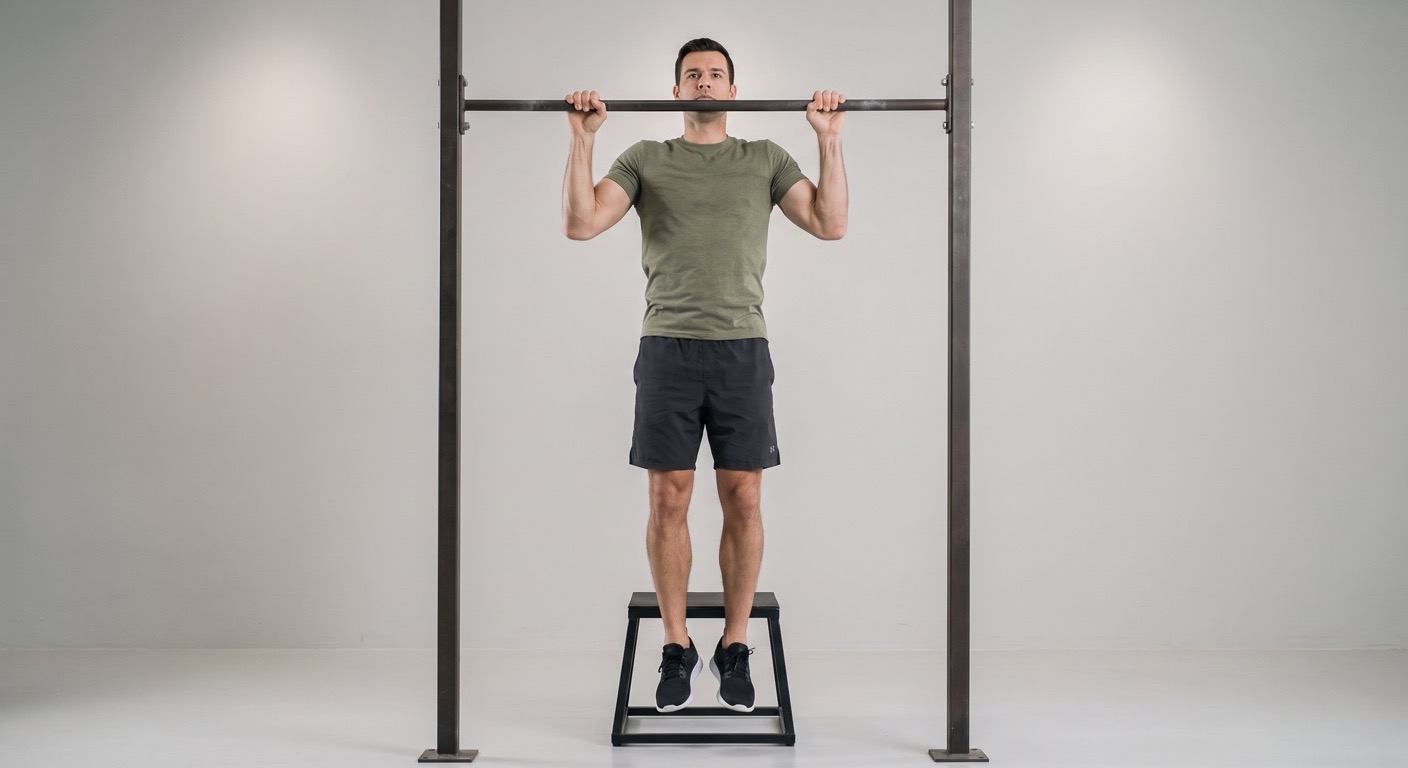
How to do negative pull-ups
- Place a stable box under the bar. Grip the bar, then step or lightly jump until your chin is above it.
- Set your shoulders, brace your abdomen and remove your feet from the box.
- Lower as smoothly as possible through the middle of the repetition.
- Finish with straight elbows in a controlled hang rather than dropping the final distance.
- Put your feet back on the box and reset. Do not perform a tiring jump before every negative.
How slow should the descent be?
A controlled three-to-eight-second descent is a useful range. Longer is not automatically better: a smooth path matters more than freezing at the top and then falling through the rest. Record the time only if it helps you make each repetition consistent.
Common mistakes
- Starting below the bar. Use the box to begin in a genuine top position.
- Dropping through the bottom. Keep resisting until the elbows straighten.
- Doing too many. Eccentric work can create substantial soreness; begin with a small number of quality reps.
- Training through elbow or shoulder pain. Stop and adjust the exercise rather than forcing a slow descent.
Progression
Start with three to five negatives separated by generous rest. When you can control each one, pair them with assisted full-range repetitions and scapular pulls. Gradually reduce assistance and occasionally test one strict pull-up while fresh. Once you can perform full reps, keep negatives only as a small accessory rather than replacing the complete movement.
See all pull-up variations, review proper technique, and use the 50 pull-ups programme to continue building repetitions.