Chest-to-Bar Pull-Ups
A strict chest-to-bar pull-up continues past the usual chin-over-bar finish until the upper chest touches or closely approaches the bar. It demands more pulling height, shoulder extension and control than a standard repetition. This page covers the strict strength variation; kipping pull-ups are a separate cycling skill.
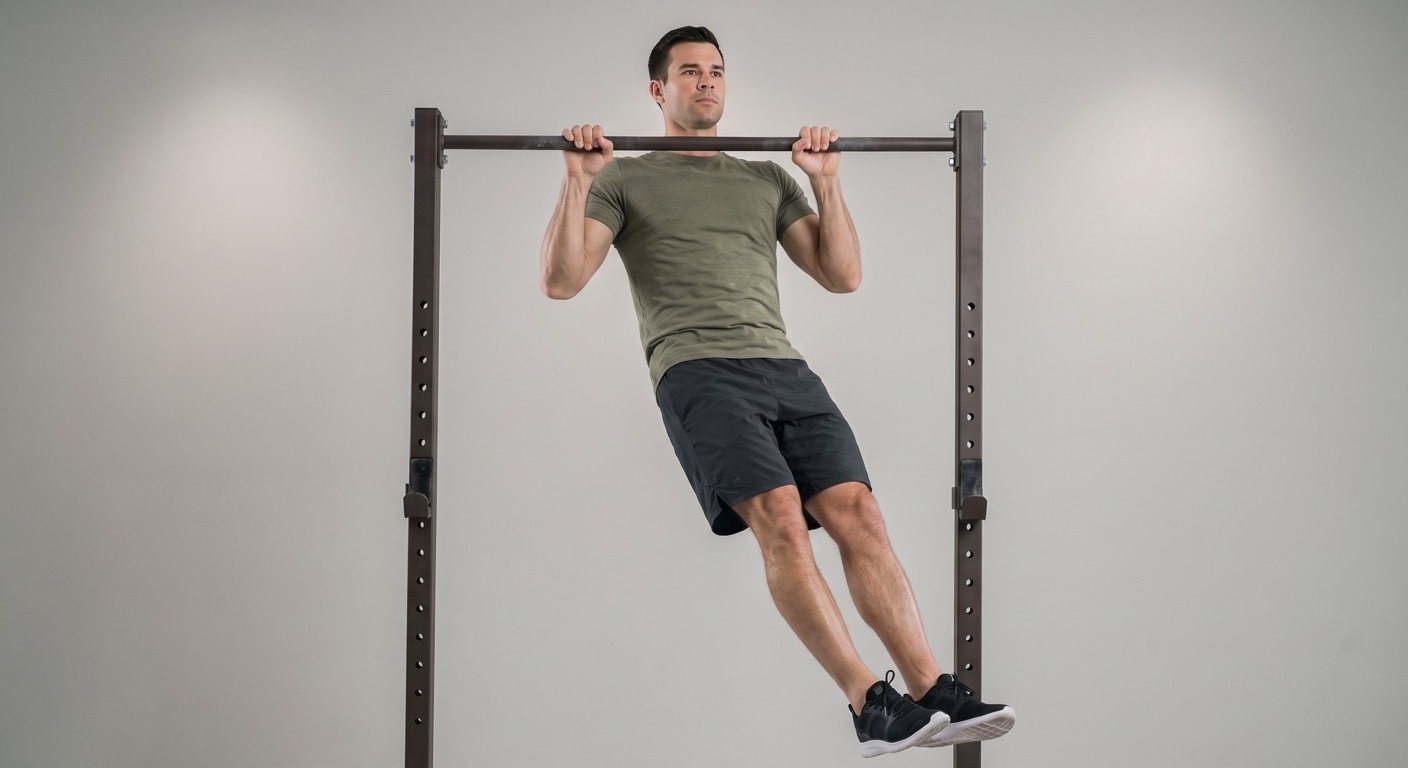
How to do a strict chest-to-bar pull-up
- Take a shoulder-width or slightly wider overhand grip and begin from a controlled hang.
- Brace your abdomen and bring the legs slightly in front to limit swinging.
- Pull the shoulder blades down, then drive the elbows toward the floor.
- As the chin passes the bar, keep pulling the elbows behind the torso and lift the chest.
- Touch or approach the bar with the upper chest, then lower through the full range.
Muscles and training effect
The lats, upper back and elbow flexors perform the pull, with extra demand near the top as the shoulder blades retract and the elbows move behind the body. The trunk must remain stiff enough to prevent the higher target from becoming a swing. This makes chest-to-bar work useful for high pulling strength and control.
Common mistakes
- Calling a chin reach chest-to-bar. The torso must rise higher; the neck does not create the range.
- Kicking for the final centimetres. If the goal is strict strength, stop the set when momentum appears.
- Pulling into the lower ribs. Aim the upper chest toward the bar and keep the path repeatable.
- Skipping the base. Build clean standard repetitions before training a higher finish.
Progressions
Begin with high holds using a box to reach the position, then perform slow chest-to-bar negatives. Add strict pull-ups that finish as high as possible without kicking. Resistance bands can help you practise the complete path, although they assist most at the bottom rather than the difficult top. Low-rep weighted pull-ups can build general strength alongside specific high pulls.
Use several crisp singles or small sets with full rest. Browse the other pull-up variations, revisit proper form, or develop your base through the 50 pull-ups programme.