Wide-Grip Pull-Ups
A wide-grip pull-up uses an overhand grip outside shoulder width. It changes the arm path and usually reduces the available range of motion, but wider is not automatically better. A moderate width that lets you pull without shoulder pinching is more useful than reaching for the ends of the bar.
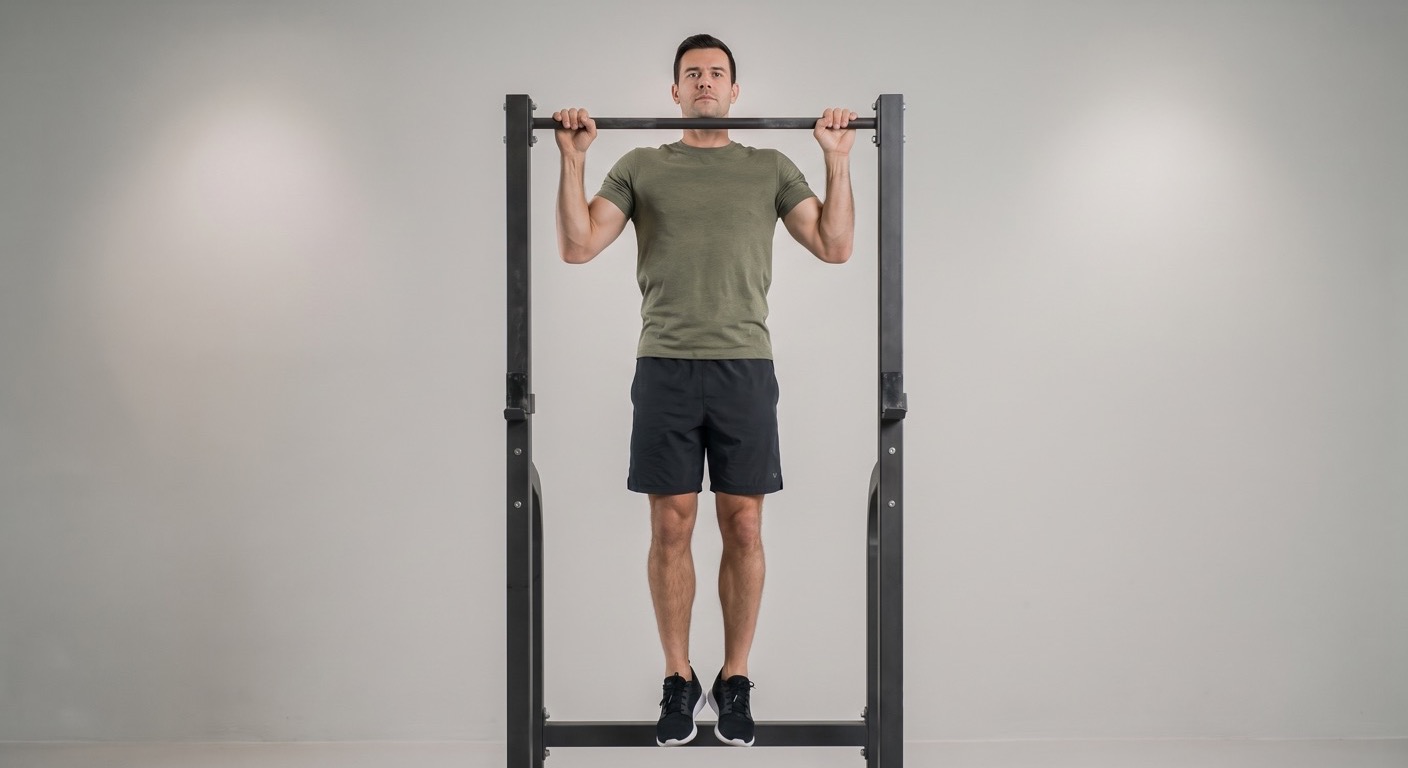
How to do wide-grip pull-ups
- Grip the bar overhand, roughly one to one-and-a-half hand widths outside each shoulder.
- Hang with straight arms, a braced trunk and shoulders controlled rather than shrugged hard into your ears.
- Pull your shoulder blades down and guide your elbows toward the sides of your torso.
- Lift until your chin reaches the bar while keeping your head neutral.
- Descend smoothly to full elbow extension. Use the same hand position on every set.
Muscles worked
The lats, teres major and upper-back muscles provide most of the shoulder movement, while the biceps, brachialis and forearms assist. The wider hand position changes joint angles, but it does not isolate a special part of the lats. The main practical differences are the feel of the pull, the reduced elbow contribution for some people and a shorter path than a shoulder-width rep.
Common mistakes
- Going excessively wide. If the grip shortens the rep dramatically or causes discomfort, bring the hands inward.
- Pulling behind the neck. Pull in front of the bar; behind-the-neck reps add an awkward shoulder position without being required.
- Half repetitions. Width is not an excuse to omit the controlled bottom position.
- Assuming wider means more lats. Choose the grip because it suits your training, not because of a muscle-isolation myth.
When to use this variation
First build dependable shoulder-width repetitions. Then use a moderate wide grip for variety, often for two or three sets after your main work. If it feels restrictive, choose neutral-grip pull-ups or return to the standard grip. More advanced trainees can use wide reps as preparation for archer and typewriter pull-ups.
Browse all pull-up variations, review proper pull-up form, or follow the 50 pull-ups programme.