Australian Pull-Ups (Inverted Rows)
Australian pull-ups, better known in many gyms as inverted rows, are horizontal pulls performed under a low bar. Your feet remain on the floor while you bring your chest toward the bar. They are not a literal vertical pull-up, but they deserve a place in the progression because the angle is easy to scale and teaches controlled back work.
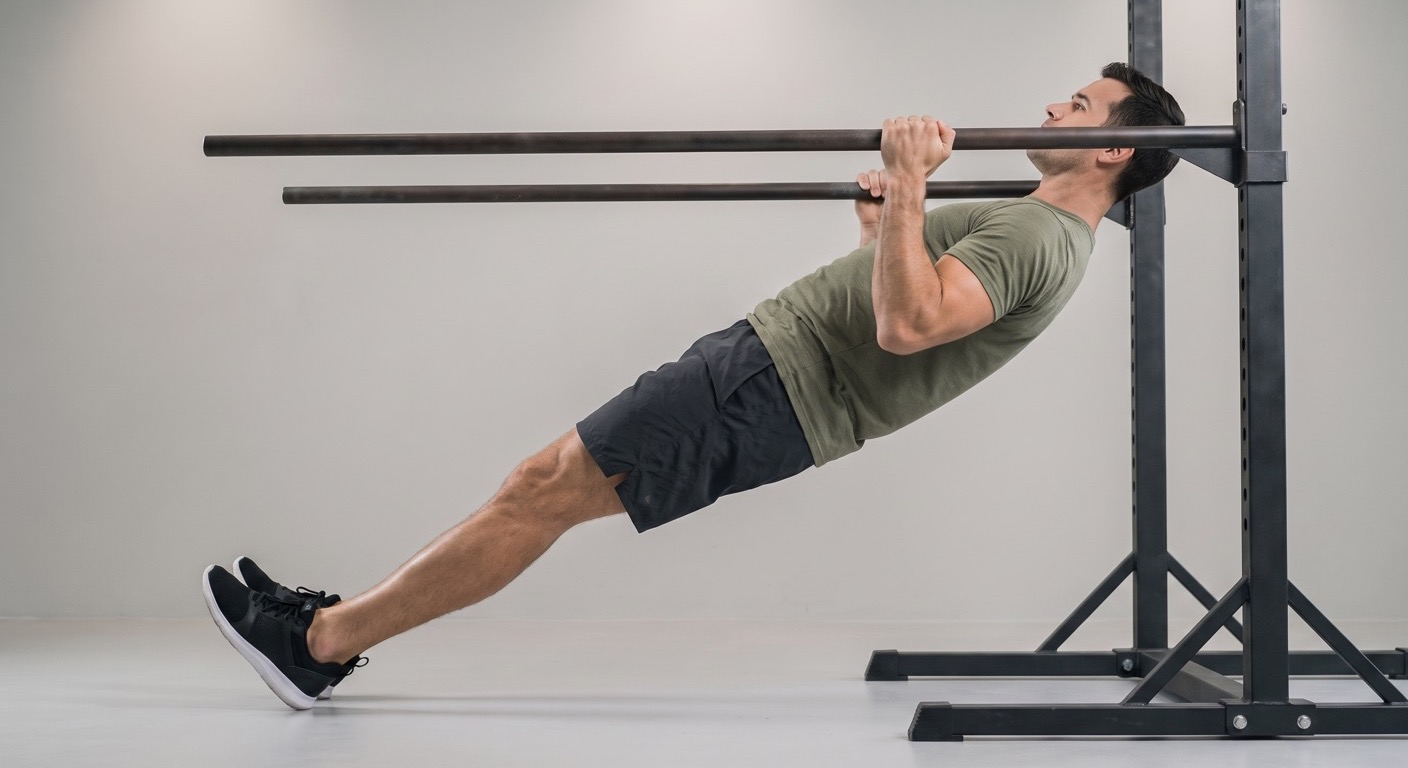
How to do Australian pull-ups
- Use a fixed bar around waist height that is designed to support bodyweight. Never improvise with unstable furniture.
- Lie beneath it and take an overhand grip a little wider than your shoulders.
- Extend the hips so your body forms a straight line from shoulders to heels.
- Pull your chest toward the bar while driving the elbows behind you.
- Pause without jutting the chin, then straighten the arms under control.
Muscles worked
The middle back, lats and rear shoulders move and stabilise the shoulder blades, while the biceps and forearms assist the pull. Glutes and abdominal muscles keep the hips from sagging. Compared with a vertical pull-up, the row places greater emphasis on horizontal shoulder-blade retraction and keeps part of your bodyweight supported by the floor.
Adjusting the difficulty
Make the exercise easier by raising the bar or bending the knees with the feet closer to your body. Make it harder by lowering the bar, moving the feet farther away or elevating the heels on a stable box. Change one variable at a time and keep your chest reaching the same point.
Common mistakes
- Sagging at the hips. Squeeze the glutes and move the torso and pelvis as one unit.
- Leading with the chin. Pull the chest to the bar instead of shortening the movement with the neck.
- An unstable setup. Use a rack, fixed low bar or suspension system rated for the exercise.
- Turning it into a partial curl. Let the shoulder blades move and finish with the upper back, not only the elbows.
Pair rows with hangs, scapular pulls and assisted pull-ups while building your first vertical rep. See the complete pull-up variation guide and the 50 pull-ups programme.